Every business depends on reliable connectivity. Whether you are building a new commercial facility, renovating an office, or expanding a multi-site campus, structured cabling services provide the organized physical infrastructure that keeps your voice, data, and video systems running at peak performance. This guide covers everything you need to know before hiring structured cabling contractors, from system components and cable types to installation processes, standards compliance, and cost factors.
What Are Structured Cabling Services?
Structured cabling services encompass the design, installation, testing, and certification of a standardized network cabling infrastructure within a commercial or industrial building. Rather than running cables ad hoc from device to device, a structured cabling system follows a hierarchical architecture defined by industry standards. This approach creates a single, unified platform that supports telephones, computers, security cameras, access control, wireless access points, and audiovisual systems.
Professional structured cabling contractors bring the expertise, tools, and certifications needed to deliver installations that meet performance specifications and pass third-party testing. Attempting a commercial cabling project without qualified contractors often leads to cable congestion, signal degradation, failed inspections, and costly rework. For businesses that value long-term reliability over short-term savings, partnering with an experienced contractor is the clear choice.
If you are new to the topic, our Ultimate Guide to Structured Cabling provides a broad overview of the fundamentals. If you are building a commercial scope, our network cabling services guide explains how Cat6A, fiber, low voltage, and data center cabling fit into the project plan.
Components of a Structured Cabling System
A standards-compliant structured cabling system consists of six core subsystems. Understanding each component helps you evaluate proposals from structured cabling contractors and ensure nothing is overlooked.
- Entrance Facilities: The point where external service provider cabling enters the building. This includes the demarcation point, conduit penetrations, and any necessary lightning protection or grounding.
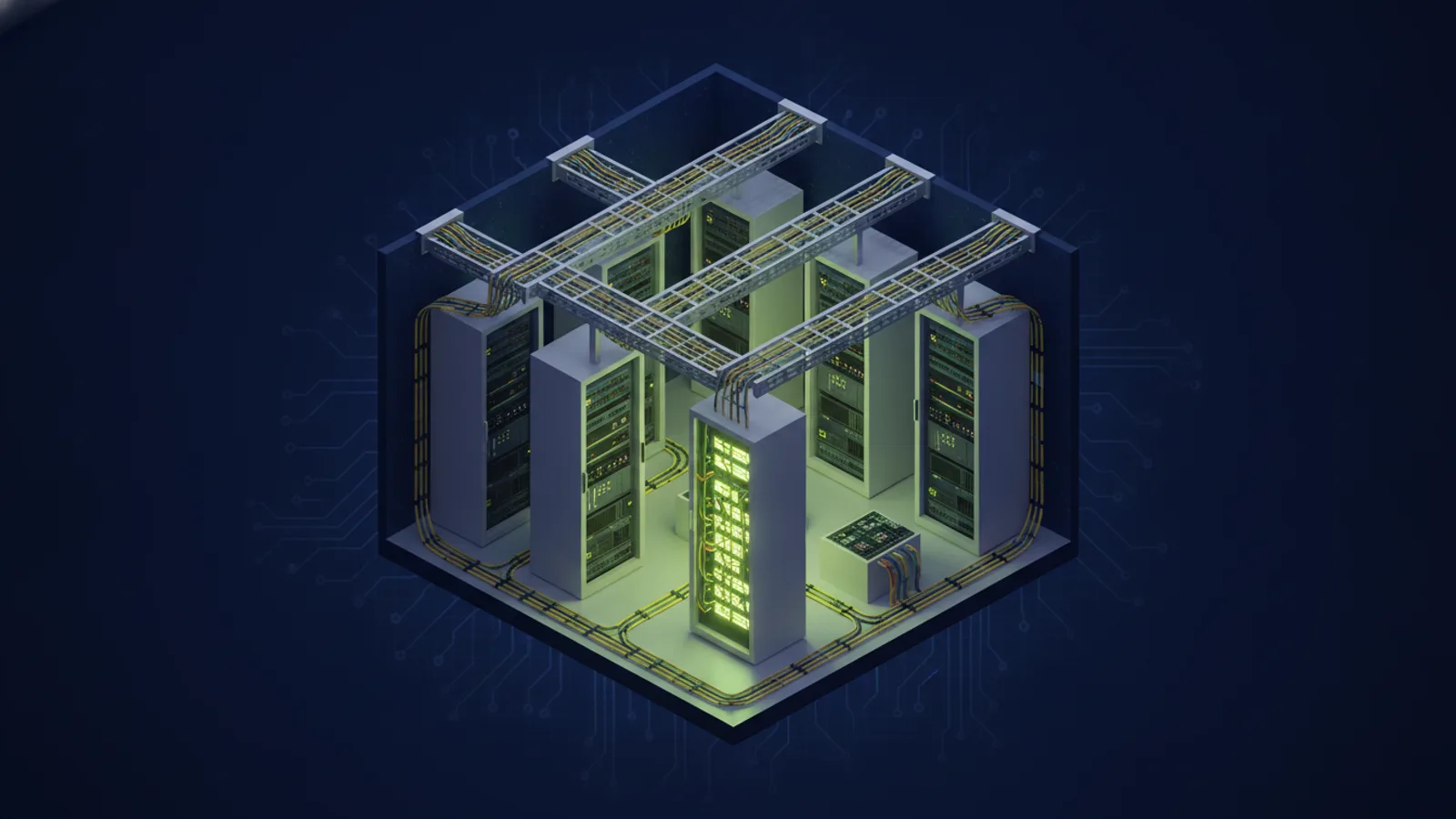
- Equipment Rooms: Centralized spaces that house servers, switches, UPS systems, and patch panels. Proper equipment room design accounts for power, cooling, cable management, and physical security.
- Backbone Cabling: The high-capacity links that connect equipment rooms, telecommunications closets, and entrance facilities across floors or buildings. Backbone runs typically use fiber optic cable for speed and distance capabilities.
- Horizontal Cabling: The individual cable runs from telecommunications closets to each work area outlet. Most horizontal cabling uses copper ethernet cable, though fiber-to-the-desk deployments are becoming more common in high-performance environments.
- Telecommunications Closets: Intermediate distribution points on each floor that house patch panels, switches, and cross-connects. Well-organized closets simplify moves, adds, and changes.
- Work Area Components: The final connection points including faceplates, jacks, patch cords, and adapters that end users interact with daily. Clean, properly labeled work area components reduce troubleshooting time.
Types of Cable Used in Structured Cabling
Choosing the right cable type is one of the most consequential decisions in any cabling project. The cable you install today will be in your walls and ceilings for a decade or more. For a detailed comparison of cable categories, see our guide to the types of structured cabling.
Copper Cabling
- Cat5e: Supports up to 1 Gbps at 100 meters. Considered a legacy standard but still adequate for basic voice and data in smaller deployments.
- Cat6: Supports 10 Gbps at up to 55 meters and 1 Gbps at 100 meters. A solid mid-range choice for offices that do not require 10G to every desk.
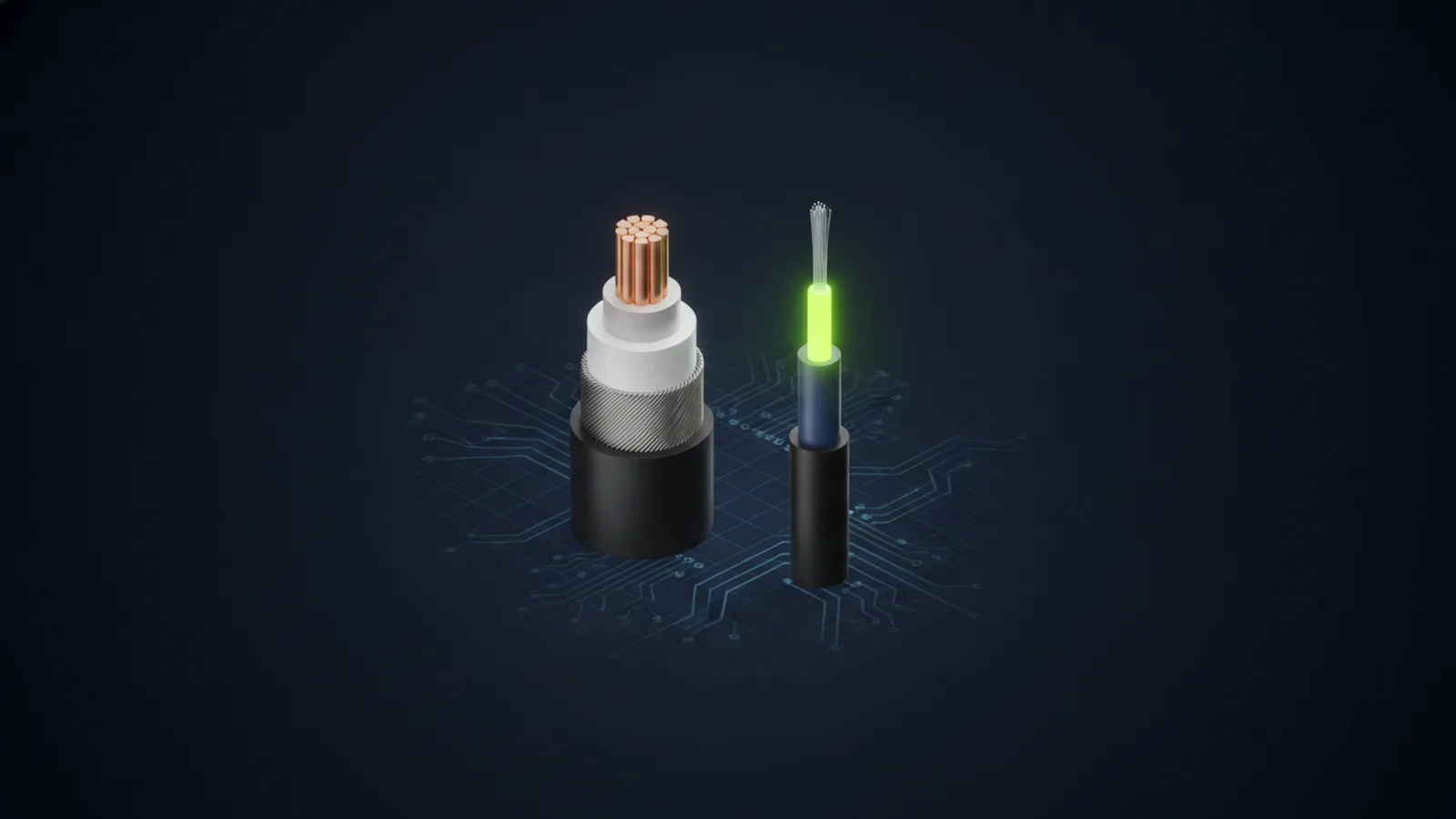
- Cat6A: Supports 10 Gbps at the full 100-meter distance with improved shielding against crosstalk. Cat6A is the recommended standard for new commercial installations and is required for Wi-Fi 6E and Wi-Fi 7 access points.
Fiber Optic Cabling
- Single-Mode Fiber: Uses a narrow core for long-distance runs between buildings or across a campus. Ideal for backbone connections spanning several kilometers.
- Multi-Mode Fiber: Features a larger core suited for shorter in-building runs such as connections between telecommunications closets and equipment rooms. More cost-effective than single-mode for distances under 300 meters.
Learn more about fiber deployment in our fiber optic cable installation guide, or explore our professional fiber optic services.
Structured Cabling Installation Process
A well-executed installation follows a disciplined, step-by-step process. Experienced structured cabling contractors do not cut corners on any of these phases.
- Site Survey and Needs Assessment: Technicians walk the facility to evaluate existing infrastructure, identify pathway routes, count cable drops, and document environmental factors such as HVAC proximity, electrical panels, and ceiling types.
- System Design and Engineering: Based on the survey, the contractor produces a detailed cabling design including floor plans, riser diagrams, cable schedules, and a bill of materials. This is where future capacity and growth are factored in.
- Pathway and Conduit Installation: Before any cable is pulled, pathways must be established. This includes J-hooks, cable tray, conduit, inner duct, and fire-stop penetrations to maintain code compliance.
- Cable Pulling: Cables are pulled through pathways with proper tension limits to avoid stretching or kinking. Each run is labeled at both ends according to the labeling scheme defined in the design phase.
- Termination: Cable ends are terminated onto patch panels, keystones, or fiber enclosures using the correct punch-down tools, connectors, and polishing techniques.
- Testing and Certification: Every cable run is tested with a calibrated cable certifier such as a Fluke DSX CableAnalyzer. Test results verify wire mapping, length, insertion loss, crosstalk, and return loss against the applicable standard.
- Documentation and Closeout: The contractor delivers as-built drawings, test reports, a labeling key, and warranty documentation. Complete documentation is essential for future moves, adds, and changes.
How to Choose a Data Cabling Contractor
Not all data cabling contractors deliver the same quality. Here is what to look for when evaluating a data cabling contractor for your next project.
- Proper Licensing: In Arizona, low voltage contractors must hold an active Arizona Registrar of Contractors (ROC) license. Verify the contractor's license status before signing any agreement.
- Industry Certifications: Look for BICSI Registered Communications Distribution Designer (RCDD) credentials and manufacturer certifications from brands like Panduit, CommScope, or Leviton.
- Proven Experience: Ask for project references in your industry and at a similar scale. Contractors who have completed multi-floor office buildings, data centers, or multi-site rollouts bring a different level of capability than those limited to small office jobs.
- Professional Testing Equipment: Reputable contractors own and maintain calibrated Fluke certification testers and provide full test reports with every project. If a contractor cannot produce certified test results, look elsewhere.
- Warranty and Support: Ask about both workmanship warranties and manufacturer system warranties. A properly certified installation may qualify for a 15 to 25-year manufacturer warranty covering components and performance.
- Communication and Project Management: The best contractors assign a dedicated project manager, provide regular progress updates, and respond quickly to questions. Businesses in Tucson and throughout Arizona deserve a partner that treats them as more than just another job number.
Explore our structured cabling services to see how Unio Digital approaches every project with these principles.
Structured Cabling Standards and Compliance
Standards exist to ensure that cabling installations perform reliably and interoperably. The three frameworks you should know are:
- TIA/EIA-568: The primary standard governing commercial building telecommunications cabling. It defines cable categories, maximum distances, connector specifications, and testing requirements. TIA-568-D is the current revision.
- BICSI (Building Industry Consulting Service International): Publishes the Telecommunications Distribution Methods Manual (TDMM), which provides detailed design and installation best practices. BICSI credentials are the gold standard for cabling professionals.
- NEC (National Electrical Code): Defines requirements for cable types in different building spaces, including plenum-rated cable for air-handling spaces and riser-rated cable for vertical pathways. NEC compliance is mandatory and inspectable.
Hiring contractors who adhere to these standards protects your investment and ensures your cabling infrastructure supports current and future technologies without performance issues.
Industries That Rely on Structured Cabling
Virtually every industry with a physical facility needs structured cabling, but some sectors have particularly demanding requirements.
- Construction and General Contracting: General contractors building commercial facilities need reliable cabling subcontractors who understand construction timelines, phased installations, and coordination with other trades. Learn more about our work with the construction industry.
- Engineering and Architecture: Engineering firms transfer large CAD files, run bandwidth-intensive simulations, and require rock-solid network connectivity to maintain productivity.
- Healthcare: Hospitals and clinics depend on cabling for electronic health records, medical imaging, nurse call systems, and life-safety communications.
- Education: Schools and universities need scalable cabling to support classrooms, labs, administrative offices, and campus-wide Wi-Fi.
- Manufacturing and Warehousing: Industrial environments require ruggedized cabling solutions that withstand dust, vibration, temperature extremes, and electromagnetic interference from heavy machinery.
Cost Factors for Structured Cabling Projects
Structured cabling is an investment, not an expense. Understanding the cost drivers helps you budget accurately and compare proposals on an apples-to-apples basis.
- Number of Cable Drops: The single largest cost driver. Each drop includes cable, connectors, faceplates, patch panel ports, and the labor to pull, terminate, and test the run.
- Cable Type and Category: Cat6A costs more per foot than Cat6, and fiber optic costs more than copper. However, the cable itself is a fraction of total project cost. Choosing higher-grade cable adds minimal cost relative to the labor savings of not having to re-cable later.
- Building Complexity: Older buildings, concrete structures, and multi-story facilities require more labor for pathway creation. New construction is typically less expensive because walls and ceilings are still open.
- Pathway and Infrastructure: Cable tray, conduit, J-hooks, fire-stopping, and core drilling add material and labor costs beyond the cable itself.
- Testing and Certification: Professional Fluke testing with full certification reports is a non-negotiable cost that ensures every run meets performance specifications.
- Documentation: As-built drawings, labeling, and closeout packages add value that pays for itself many times over during the life of the system.
When comparing bids, be cautious of proposals that omit testing, documentation, or pathway details. The lowest price often reflects missing scope, not better efficiency.
Structured Cabling vs Point-to-Point Wiring
Some facilities still use point-to-point wiring, where individual cables run directly from each device to its destination without a centralized patch panel or distribution framework. While point-to-point may seem simpler and cheaper up front, it creates significant challenges as the network grows.
- Scalability: Structured cabling supports moves, adds, and changes through simple patch cord swaps. Point-to-point wiring requires pulling new cable for every change.
- Troubleshooting: Structured systems with labeled patch panels allow technicians to isolate problems quickly. Point-to-point wiring often results in tangled, unlabeled cable bundles that are difficult to trace.
- Standards Compliance: Structured cabling meets TIA/EIA standards and qualifies for manufacturer warranties. Point-to-point wiring rarely meets any standard.
- Long-Term Cost: The upfront savings of point-to-point wiring are quickly consumed by higher maintenance costs, longer troubleshooting times, and expensive rework.
For a deeper look at this comparison, read our article on unstructured vs structured cabling.
Future-Proofing Your Cabling Infrastructure
The cabling you install today needs to support the technology you adopt over the next 10 to 15 years. Future-proofing does not mean buying the most expensive cable available. It means making smart decisions during the design phase.
- Install Cat6A for Horizontal Runs: Cat6A supports 10 Gbps to every desk and is required for next-generation wireless access points. The incremental cost over Cat6 is minimal compared to the cost of re-cabling later.
- Use Fiber for Backbone Connections: Fiber optic backbone links between floors and buildings provide the bandwidth headroom to support growing data demands without replacement. Explore our fiber optic services for backbone design.
- Oversize Pathways: Install conduit and cable tray with 40 to 60 percent spare capacity. Pulling additional cables through existing pathways is far cheaper than creating new ones.
- Plan for Wireless Density: Modern offices deploy one access point for every 1,500 to 2,500 square feet. Each AP requires a dedicated cable drop. Plan AP locations and cable drops now, even if you are not deploying all of them immediately.
- Document Everything: Complete, accurate documentation ensures that future contractors and IT staff can work with your infrastructure efficiently without guesswork.
For more on low voltage considerations, see our guide to low voltage cabling best practices.
Partner with Unio Digital for Your Cabling Project
Unio Digital provides end-to-end structured cabling services for businesses throughout Arizona and nationwide. From initial site survey through design, installation, testing, and documentation, our certified technicians deliver clean, organized, standards-compliant cabling systems built to perform for years. We work with general contractors, property managers, and IT teams who value quality, communication, and a partner that listens.
Visit our cabling services overview to learn about our full range of capabilities, or request a quote to start the conversation about your next project.
Need Professional Structured Cabling?
Get a free estimate for your cabling project from our certified technicians.
Get a Quote