Quick Answer: Structured Cabling Cost Per Drop
A structured cabling installation costs $150 to $300 per copper Cat6 drop, $200 to $400 per Cat6A drop, and $300 to $800 per standard fiber drop in 2026, with complex or exterior fiber runs reaching $1,000 or more. A "drop" is one terminated, tested cable run from the closet to an endpoint, and the price bundles cable, connectors, testing, and labor into one unit.
- Labor, not the cable, drives the price. Installation labor is identical across copper categories, which is why Cat5e, Cat6, and Cat6A cluster tightly per drop.
- Drop count and building access move the total more than cable category. An open-ceiling office prices differently than a finished-wall retrofit at the same drop count.
- Fiber costs two to three times a copper drop, because of the termination and testing precision it demands.
Pricing reviewed August 2026. For the full benchmark across every category and fiber cost-per-foot, see our structured cabling cost benchmark.
This is who this guide is for: a facilities manager, IT director, or general contractor scoping a build-out who needs a per-drop number to plan a budget before requesting quotes. If you already have a drop count in hand, the tables below let you turn it into a planning-grade total in a few minutes.
What "Cost Per Drop" Means
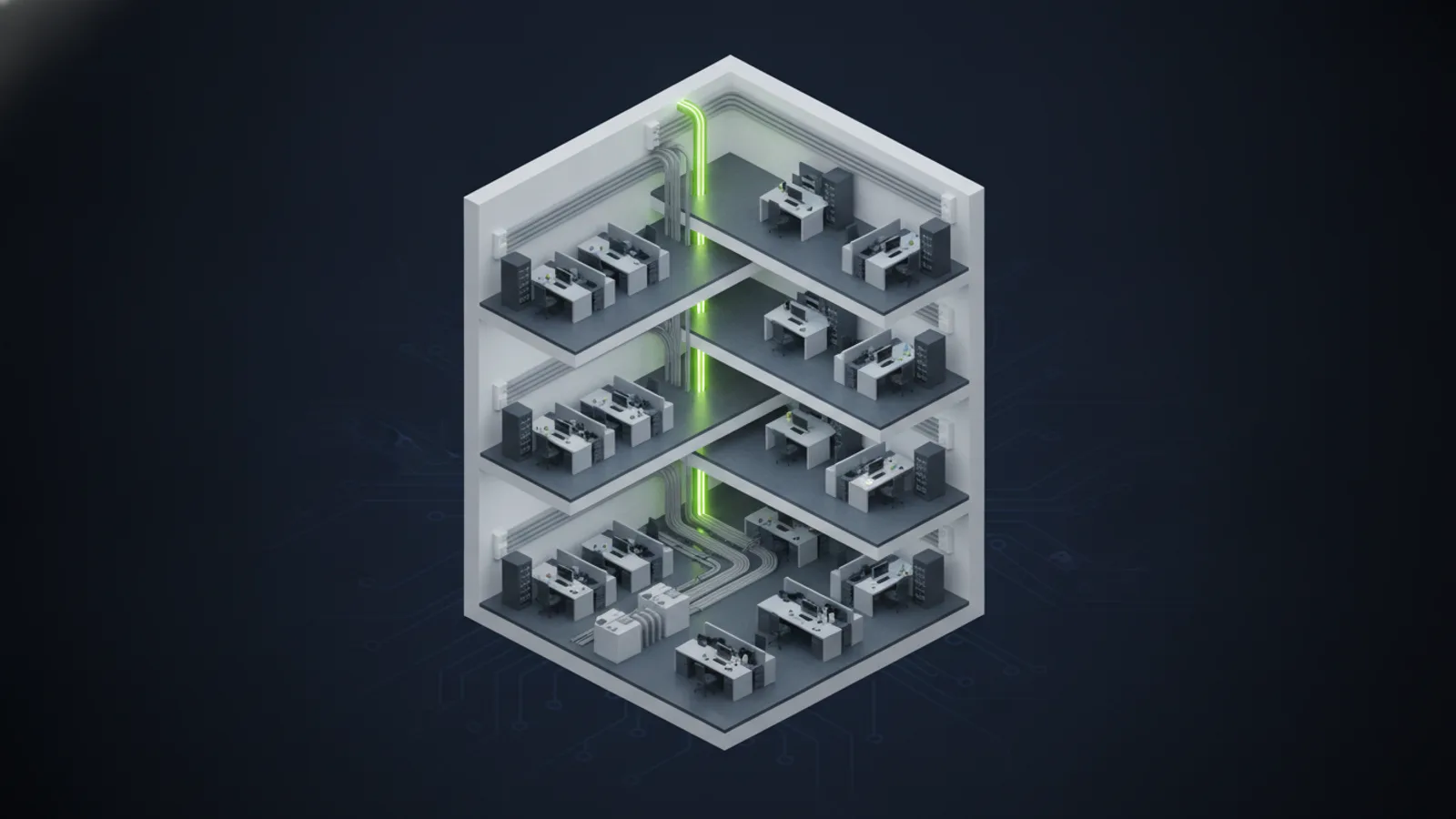
A drop is a single cable run, terminated at both ends and tested, from a network closet or patch panel to one endpoint: a workstation, a wireless access point, a printer, or a camera. Per-drop pricing is the standard unit for scoping a structured cabling project because it bundles everything a working connection requires into one number: the cable itself, the jack and faceplate or patch-panel port, labor to pull and terminate the run, and certification testing to confirm it meets spec. A quote that prices "per drop" should include all of that. A quote that prices cable only and bills labor separately is not directly comparable, and it is the single most common way a cheap-looking bid turns into a more expensive final invoice.
What Drives the Price Per Drop
Two buildings with the same drop count can land on very different totals. These are the variables that move a per-drop quote up or down:
| Cost driver | How it moves the price |
|---|---|
| Cable category | Copper categories (Cat5e, Cat6, Cat6A) cluster tightly per drop because labor is identical across them; fiber runs two to three times a copper drop due to termination and testing precision. |
| Run distance | Longer runs use more cable and more labor time. Copper is capped at 100 meters; runs approaching that limit or requiring a fiber backbone instead add cost. |
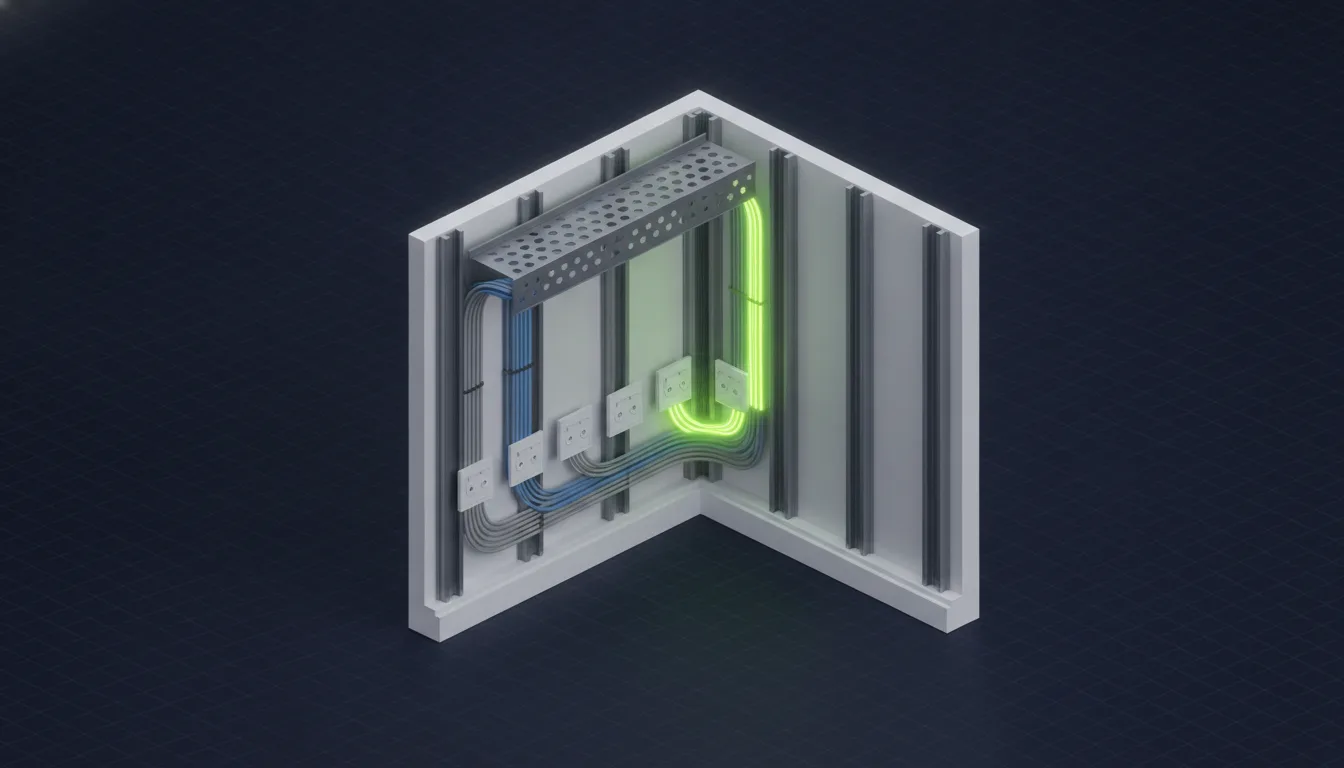
| Pathway and building access | Open cable tray or an accessible drop ceiling is the cheapest pathway. Fishing cable through finished walls, hard lids, plaster, or occupied space adds labor hours per drop. |
| Conduit vs open-air | Pulling cable through existing conduit is slower than an open-air tray run, and new conduit adds a separate line item entirely. |
| Labor market | Licensed low-voltage labor rates vary by metro and by whether work happens during business hours or after-hours; after-hours and weekend access windows carry a premium. |
| Drop count and density | A single mobilization pulling forty drops in one visit prices lower per drop than four separate visits of ten drops each, because setup and access time amortize across more terminations. |
The honest way to compare two bids is to normalize for scope first: same drop count, same cable category, same pathway assumptions, same testing standard. A bid that looks 20 percent cheaper per drop is usually missing one of these variables, not genuinely more efficient.
Copper vs Fiber Cost Per Drop, Side by Side
Choosing a cable category is mostly a bandwidth and distance decision, not a budget one: the copper categories are close enough per drop that the choice rarely swings a project total. Fiber is the real cost step-up, and it earns that premium on backbone runs and distances beyond copper's 100-meter limit.
| Cable category | Installed cost per drop | Typical use |
|---|---|---|
| Cat6 (copper) | $150 to $300 | The standard workstation data drop for new commercial installs |
| Cat6A (copper) | $200 to $400 | Full 10 GbE to the 100-meter limit; a 10-15 percent premium over Cat6 |
| Fiber (standard interior drop) | $300 to $800 | Office endpoint, wireless AP uplink, or short backbone run |
| Fiber (complex / exterior drop) | $800 to $1,000+ | Long runs, conduit, or building-to-building termination |
For the full benchmark, including fiber priced per foot and a whole-building estimate, see our structured cabling cost benchmark. For the cable-selection decision itself, our Cat6 vs Cat6A comparison and fiber vs copper comparison walk through which category to specify for a given run.
Sample Cost Breakdown for a 20-Drop Office Build-Out
Here is how the per-drop ranges above translate into a real project budget. This example assumes a typical build-out: open drop-ceiling access, a mix of workstation and access-point drops, and standard business-hours scheduling.
| Scenario | 20 drops, all Cat6 | 20 drops, all Cat6A | 16 Cat6 + 4 fiber uplink |
|---|---|---|---|
| Per-drop range | $150 - $300 | $200 - $400 | mixed |
| Estimated project total | $3,000 - $6,000 | $4,000 - $8,000 | $4,800 - $9,200 |
These are planning-grade estimates, not a quote. Change any one of the cost drivers above, most commonly building access, and the total moves. A site survey is what turns a planning range into a fixed-scope number.
How This Compares to Bundled Structured Cabling Pricing
Per-drop pricing is the right unit when you already have a drop count and want to budget a discrete build-out, like the 20-drop example above. It is not the only way to price a project: a whole-building or multi-phase installation is often quoted as a bundled structured cabling package that includes backbone design, patch panel and rack build-out, and labeling and documentation alongside the drops themselves. Our structured cabling cost benchmark covers that bundled view, including fiber priced per foot and a 100-to-200-drop whole-building estimate. Use per-drop pricing to scope a defined build-out; use the bundled benchmark to plan a full project.
Getting an Accurate Quote for Your Site
The ranges above are a planning tool, not a substitute for a site survey. To get an apples-to-apples quote from more than one contractor, specify the same scope to each:
- Exact drop count, broken out by cable category if the project mixes copper and fiber.
- Pathway assumptions: open tray, existing conduit, or finished-wall fishing, since this is the single biggest swing factor.
- Testing and certification standard required for every drop, so no bid quietly skips it.
- Scheduling constraints: business-hours access versus after-hours or occupied-space work.
Unió Digital is an Arizona ROC-licensed low-voltage contractor (ROC 327245, ROC 333580) serving Tucson and Phoenix. A free site survey turns these per-drop ranges into a fixed-scope quote for your building. See our full structured cabling services for the complete project scope, from design through certification.
Frequently Asked Questions
What is the structured cabling installation cost per drop?
Structured cabling installation cost per drop runs $150 to $300 for copper Cat6, $200 to $400 for Cat6A, and $300 to $800 for a standard interior fiber drop in 2026, rising to $1,000 or more for complex or exterior fiber runs. The price bundles cable, termination, and certification testing into one installed figure per endpoint.
What counts as one "drop" in a cabling quote?
A drop is a single terminated, tested cable run from a network closet or patch panel to one endpoint, such as a workstation, access point, or camera. A quote priced "per drop" should include the cable, the jack or patch-panel port, labor, and certification testing as one bundled figure.
Why does cable category barely change the price per drop?
Installation labor is identical across the copper categories, so the price difference between Cat5e, Cat6, and Cat6A is a single-digit to low-double-digit percentage driven by materials, not labor. Building access, pathway, and drop count move the total far more than which copper category is specified.
How much more does fiber cost per drop than copper?
A standard interior fiber drop costs two to three times a copper Cat6 drop, roughly $300 to $800 versus $150 to $300, because of the termination and testing precision fiber requires. Fiber earns that premium on backbone runs and distances beyond copper's 100-meter limit.
What is the fastest way to get an accurate per-drop quote?
Specify the same drop count, cable category, pathway assumptions, and certification standard to every contractor you quote, then confirm with a site survey. Pathway and building access is the single biggest swing factor, so a quote that skips it is not comparable to one that includes it.
Want a Fixed-Price Cabling Quote for Your Build-Out?
A site survey turns these per-drop ranges into a fixed-scope quote from a licensed Arizona low-voltage contractor.
Request a Cabling Quote