Fiber optic installation for a commercial building runs about $1 to $6 per linear foot for interior labor and materials, or $300 to $800 per fiber drop installed for a typical office run. Whole-building projects with 100 to 200 drops generally land between $15,000 and $30,000. The three variables that move the number most are the run path (interior, aerial, or underground), whether the fiber is single-mode or multimode, and the termination method (field connectors vs fusion splicing). Labor, not the glass, is the largest line item on almost every job.
Quick Answer: What Fiber Optic Installation Costs
Budget $1 to $6 per foot for interior runs, rising to $7 to $12 per foot when cable has to route through finished walls, ceilings, or existing conduit. Aerial runs on poles cost roughly $8 to $12 per foot, and underground is the expensive path at $15 to $35 per foot for trenching and $20 to $30 for directional boring. Per terminated drop, plan on $300 to $800 for standard office work. A single building-to-building link can range from a few thousand dollars for a short aerial run to tens of thousands for a trenched underground path.
Fiber Optic Cost Per Foot
Cost per foot combines cable material and installation labor. Material is a small share; the labor and pathway drive the total. The ranges below reflect 2026 U.S. commercial pricing.
| Run type | Installed cost per foot | Notes |
|---|---|---|
| Interior (open pathway) | $1 to $6 | Cable tray, plenum, or accessible ceiling; the baseline case. |
| Interior (complex routing) | $7 to $12 | Fishing finished walls, tight conduit, or occupied space. |
| Aerial (utility poles) | $8 to $12 | Between buildings on a campus; needs attachment rights. |
| Underground (trenched / bored) | $15 to $35 (trench); $20 to $30 (bore) | Trenching, boring, and restoration dominate the cost. |
On materials alone, single-mode fiber is cheap at roughly $0.09 to $1.49 per foot, while multimode OM3/OM4 runs about $1.50 to $6.00 per foot. Counterintuitively, the cheaper single-mode cable is usually the better long-distance value once the optics are considered. We cover that trade-off in the cost comparison below.
Fiber Optic Cost Per Drop
A "drop" is one terminated fiber run from the closet to an endpoint, tested and certified. Per-drop pricing is the most useful number for scoping an office because it bundles cable, connectors or splices, testing, and labor into one unit.
| Drop type | Installed cost per drop | Typical use |
|---|---|---|
| Standard interior fiber drop | $300 to $800 | Office endpoint, AP uplink, or short backbone run. |
| Fusion-spliced drop | Toward the high end | Lowest loss; used on backbone and long runs. |
| Complex / exterior drop | $800 to $1,000+ | Long runs, conduit, or building-to-building termination. |
| Cat6 copper drop (for reference) | $150 to $300 | Standard workstation data; see structured cabling. |
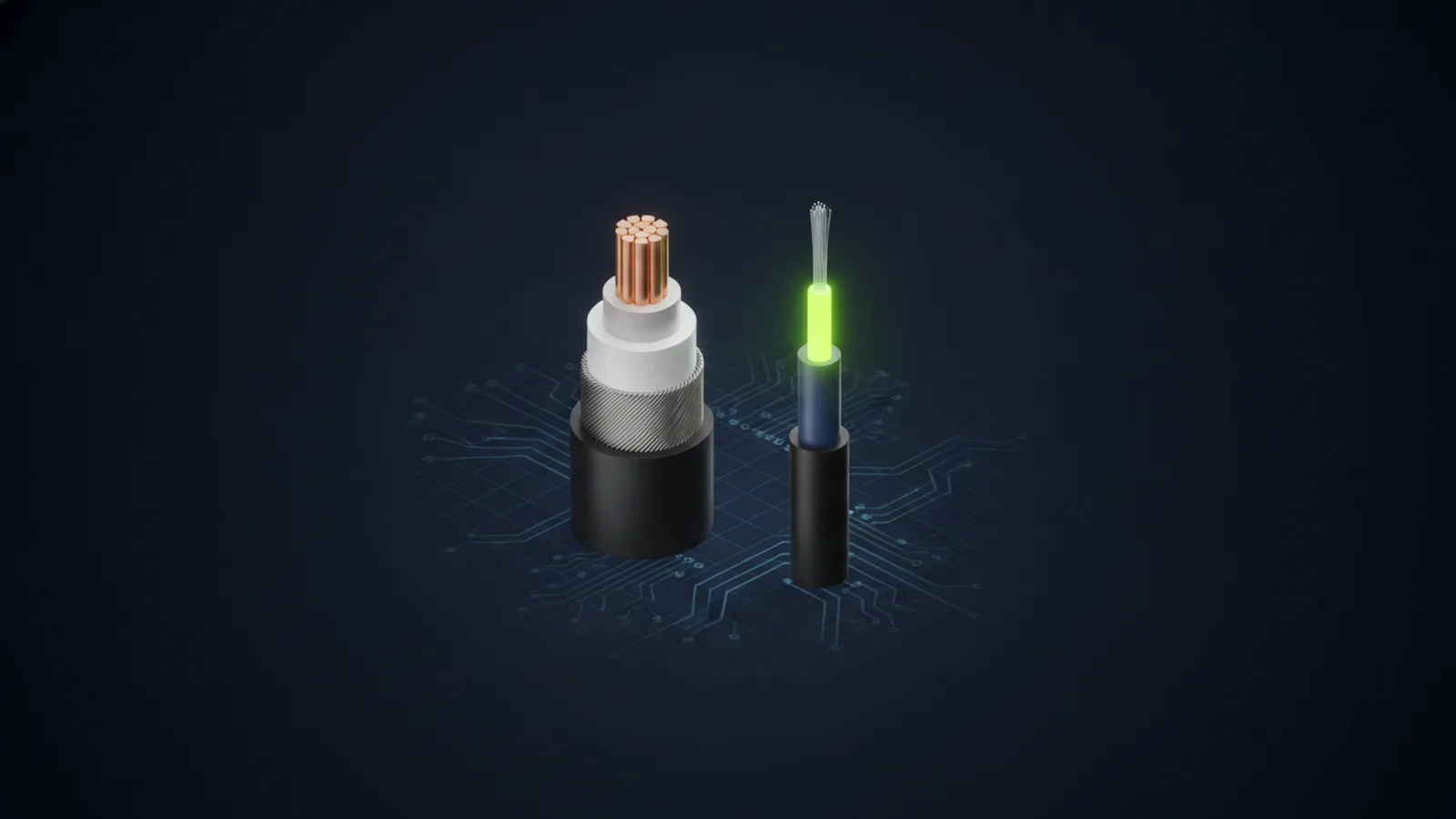
For context, a copper Cat6 data drop runs $150 to $300 installed, so fiber typically costs two to three times a copper drop because of the termination and testing precision fiber demands. If you are weighing fiber against copper for a specific run, our fiber vs copper comparison lays out where each one wins.
Fiber Optic Cost Per Building
Whole-building numbers depend on drop count, backbone design, and how many closets (IDFs) the building needs. As a planning orientation for commercial work in 2026:
- 100 to 200 drops: roughly $15,000 to $30,000 for a typical commercial building.
- Building-to-building backbone (aerial): a short campus run is often a few thousand dollars; longer runs scale with distance.
- Building-to-building backbone (underground): trenched or bored paths can reach tens of thousands of dollars per run because of the civil work.
These are orientation ranges, not quotes. Fiber pricing is scope-driven: drop count, distance, single-mode vs multimode, connector vs fusion splice, and pathway all move the number. A site survey turns them into a fixed figure. For how fiber fits into a building-wide low-voltage plan, see our structured cabling services and the fiber optic cabling service page.
Single-Mode vs Multimode: The Cost Delta
The single-mode vs multimode decision changes total cost, but not in the direction most people expect. Single-mode cable is cheaper per foot, yet historically used pricier optics; modern optics have narrowed that gap, which is why single-mode is increasingly the default for new backbone. Multimode can be cheaper on very short runs where its transceivers are inexpensive. This is a cost-and-distance trade-off, not a quality one. We break down the full picture, including transceiver cost and distance limits, in our single-mode vs multimode fiber comparison rather than repeating it here.
What Moves a Fiber Quote
Two buildings with the same drop count can get very different quotes. These are the variables that swing the price:
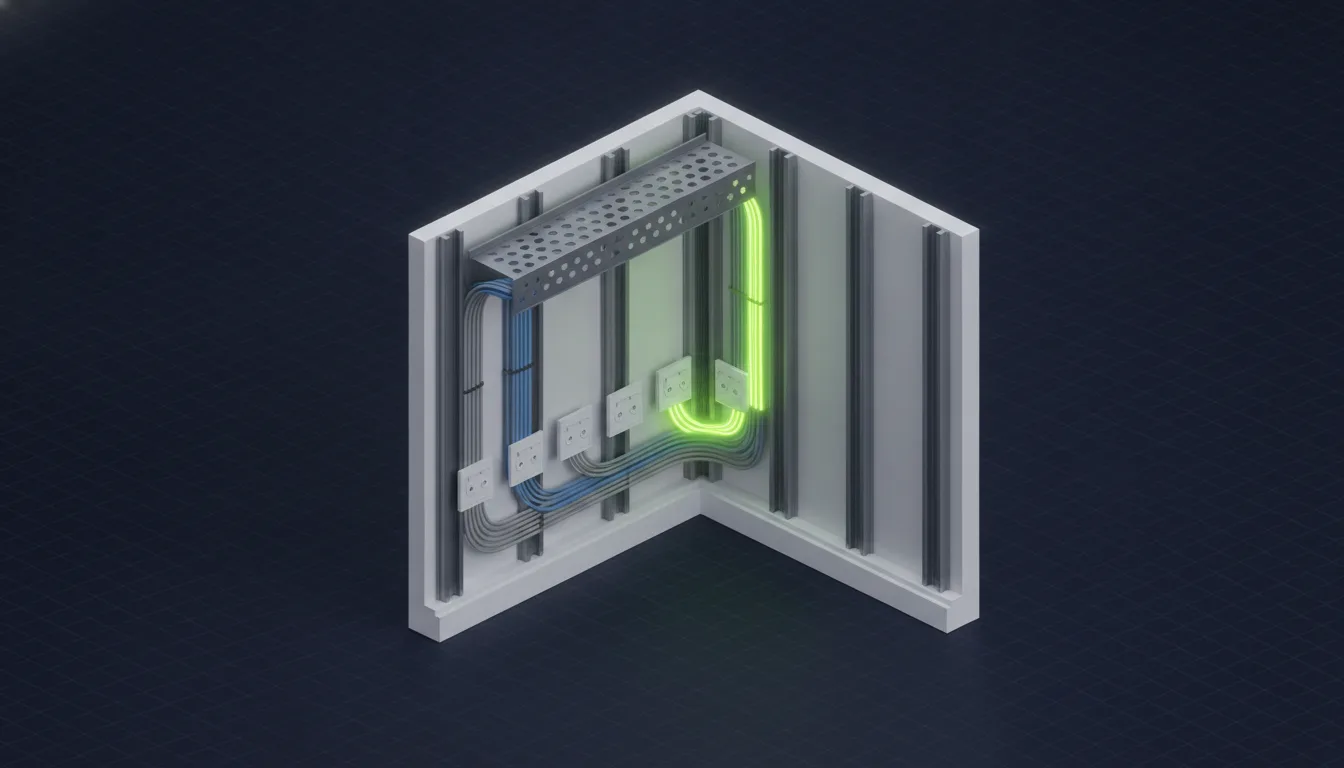
- Run path — interior open pathway is cheapest; underground trenching is the most expensive by a wide margin.
- Distance — total footage drives both material and labor, and long runs favor fusion splicing.
- Termination method — field-terminated connectors are faster and cheaper; fusion splicing costs more but delivers the lowest signal loss.
- Single-mode vs multimode — affects both cable and optics cost (see the comparison above).
- Testing and certification — OTDR and insertion-loss testing on every strand is included in quality installs and is not where you cut corners.
- Building conditions — occupied space, hard ceilings, firestopping, and conduit fill all add labor hours.
Is Fiber Worth It for a Small Office?
For most small offices, the honest answer is that copper Cat6 or Cat6A to the desk plus a short fiber backbone is the cost-effective design, not fiber to every workstation. Fiber earns its premium on backbone runs between floors and buildings, on runs longer than copper's 100-meter limit, and where electromagnetic interference or future bandwidth headroom justify it. If your whole office fits inside a 100-meter copper reach and you are not planning multi-building growth, the money is usually better spent on quality copper and a clean structured-cabling design. If you expect to add buildings, cameras, or high-density Wi-Fi, running fiber backbone now is cheaper than retrofitting later.
Frequently Asked Questions
How much does fiber optic installation cost per foot?
Interior commercial fiber runs about $1 to $6 per foot installed, rising to $7 to $12 per foot for complex routing through finished walls or conduit. Aerial runs on poles cost roughly $8 to $12 per foot, and underground trenching runs $15 to $35 per foot (directional boring $20 to $30) because of the civil work involved.
What does a fiber optic drop cost?
A standard terminated interior fiber drop runs $300 to $800 installed, including cable, termination or splicing, and certification testing. Complex or exterior drops with long runs or conduit can exceed $1,000. For reference, a copper Cat6 data drop runs $150 to $300, so fiber typically costs two to three times a copper drop.
How much does it cost to run fiber between two buildings?
A short aerial run between buildings on a campus is often a few thousand dollars, while an underground trenched or bored path can reach tens of thousands of dollars because of the excavation and restoration work. The path, not the fiber, drives the cost. A site survey is the only way to price a specific run.
Does single-mode or multimode fiber cost more?
Single-mode cable is cheaper per foot ($0.09 to $1.49) than multimode OM3/OM4 ($1.50 to $6.00), but the optics have historically favored multimode on short runs. Modern optics have narrowed the gap, so single-mode is increasingly the default for new backbone. See our single-mode vs multimode fiber comparison for the full cost-and-distance breakdown.
Is fiber worth it for a small office?
For most small offices, copper Cat6 or Cat6A to the desk plus a short fiber backbone is more cost-effective than fiber to every workstation. Fiber earns its premium on backbone runs, distances beyond copper's 100-meter limit, and where future bandwidth or interference resistance justify it.
How much does a whole-building fiber installation cost?
A commercial building with 100 to 200 drops generally runs $15,000 to $30,000 in 2026, depending on backbone design, closet count, and pathway complexity. Drop count and run distance are the primary cost drivers, so a per-drop or per-foot estimate scaled to your building is the right way to budget.
Sources & References
- Per-foot and per-drop installation pricing: The Network Installers — Fiber Optic Installation Cost per Foot
- Single-mode vs multimode material pricing: The Network Installers — Cost of Fiber Optic Cable
- Commercial whole-building and per-mile ranges: Angi — Fiber Optic Cable Installation Cost
- Cabling standards: ANSI/TIA-568 Telecommunications Cabling Standard
Want an Exact Fiber Number for Your Building?
A site survey turns these ranges into a fixed-scope quote. Get fiber, backbone, and termination priced by a licensed Arizona low-voltage contractor.
Request a Cabling Quote